



UX Case Study — swift
2025 / Medical Transportation AI
Project Snapshot
Role / Ux Designer, Research, UI Design
Timeline / 3 months
Team / Swift
Focus / Accessibility, affordability, mobility, healthcare, trust
average time to request a ride decreased from
S01 — Challenge
2.1min → 1.5min
+108 pts
Research Data
36 users
Research participants
The problem
Uncertainty around medical urgency and cost drives non-critical cases to emergency services, increasing wait times and strain on EMS systems. Swift uses AI-guided decision support to help users assess urgency and choose appropriate care.
The response
Swift reimagines non-emergency medical transportation with transparent pricing, certified care, and a calm, intuitive patient experience.
S02 — Process
01
Research the transportation gaps
Identified why patients avoided ambulances, delayed treatment, or struggled to find reliable transportation during urgent, non-emergency situations.
02
Design a seamless flow
Designed a streamlined AI-powered request flow that reduced hesitation, improved decision speed, and increased completion by helping users quickly determine the right transportation option for their situation
03
Built for safety and confidence
Clear next steps and safety confirmations increased user confidence, leading to higher flow completion and a more reassuring transportation experience.
Registered Nurse, (RN)
I need a reliable way to get patients to care without waiting for an ambulance.
Goals
Coordinate safe transportation and reduce delays in patient care.
Needs
Reliable drivers, clear availability, and a simple scheduling process.
Frictions
Limited transportation options, long wait times, and expensive emergency transport.
Priority
Move patients to the appropriate facility quickly and safely.
Patient seeking urgent, non-emergency care
I just need help getting to care, not another bill.
Goals
Reach medical care quickly without unnecessary costs.
Needs
Affordable pricing, fast pickup, and confidence she'll arrive safely.
Frictions
Doesn't own a car, rideshares aren't medically equipped, and ambulance costs are too high.
Priority
Get to urgent care safely without creating additional financial stress.
Design response
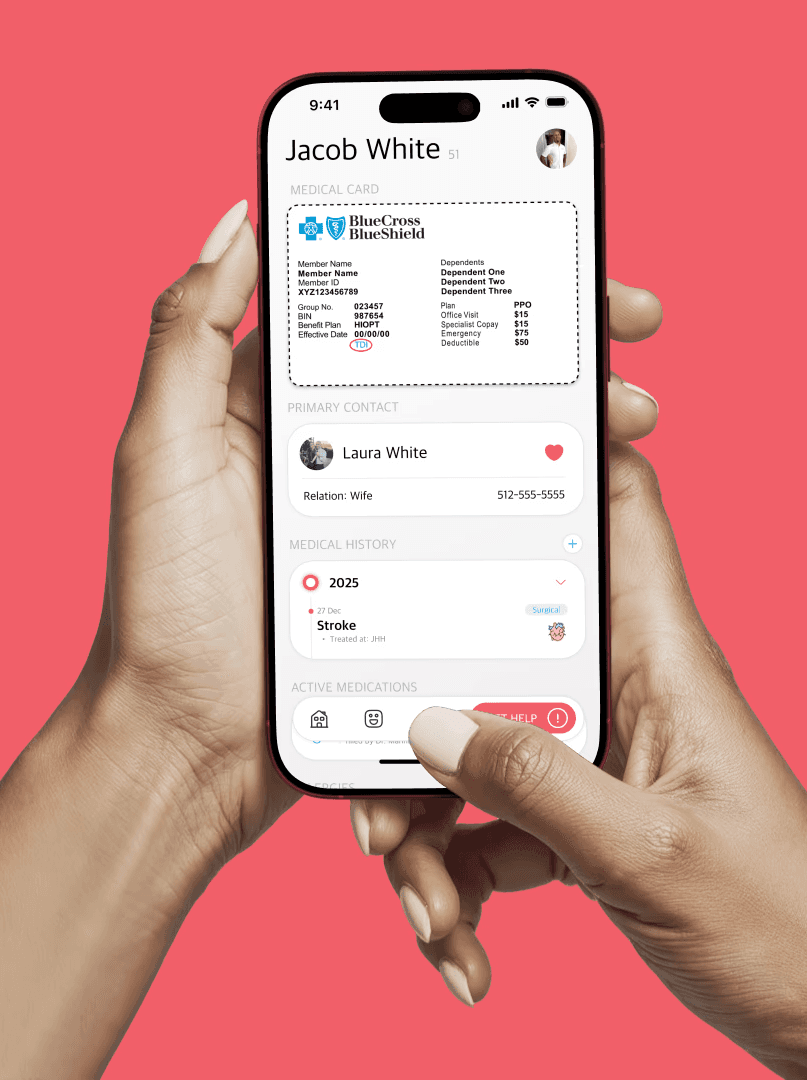
The home screen surfaces the information users need most before requesting a ride. Medical history, insurance information, emergency contacts, and medications are organized into one accessible dashboard, reducing stress and helping users move through the request process with confidence.

Design response

Design response
Getting patients to care - without the financial burden
Once a transportation option is selected, users can quickly request a ride, view transparent pricing, and track their driver in real time. Designed specifically for urgent, non-emergency situations, the experience provides a safe, reliable alternative between rideshare services and costly ambulance transport.

VISION VIDEO
The vision video follows a patient from the moment an injury occurs through AI-guided triage, ride selection, and arrival at the appropriate medical facility. It established the product vision early, aligning the experience around confidence, affordability, and accessible care before designing individual screens.
Narrative
User-first story
Concept
Accessible medical transportation
Alignment
Shared vision


S03 — Impact
What changed
Testing showed that users moved through the request flow with greater confidence when AI guidance, transparent pricing, and clear next steps reduced uncertainty. The biggest improvement came from simplifying transportation decisions during stressful situations.
Final outcomes
AI-guided request flow improved decision speed and reduced hesitation.
Average time to request a ride decreased from 2.1 min to 1.5 min
Safety confirmations and clear next steps increased user confidence throughout the journey.
Our Final Concept
Hey! Open for work Q3